


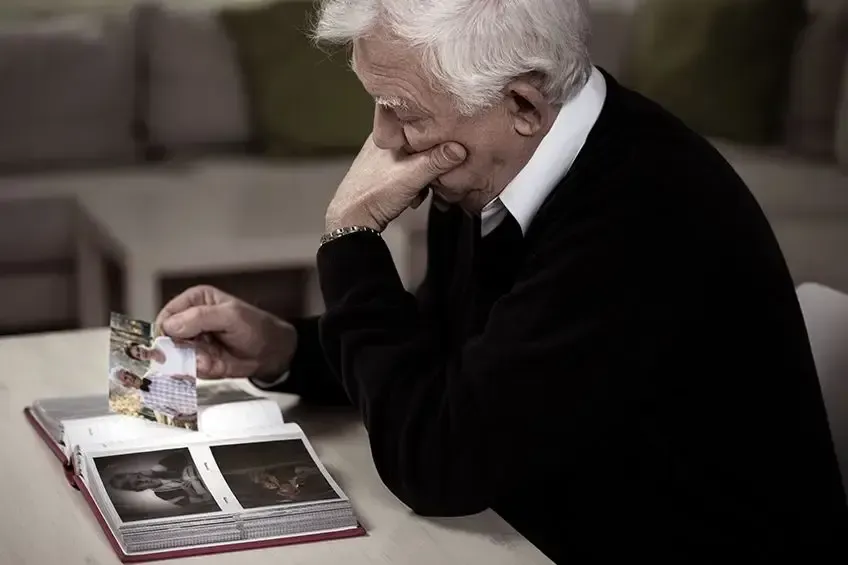
While women and men both feel grief over the loss of a spouse, widowers often have a unique set of needs. This typically stems from the fact that while a woman may have many friends she can lean on following the loss of a spouse, a man may have lost his best friend and closest companion all at once. Perhaps the saying “Women mourn – men replace” has its roots in intense loneliness caused by a lack of previously established close friendships. It has been frequently asked whether a widower would be as driven to hurriedly replace his wife and best friend if he had someone with whom he could share his grief. Men face unique problems as widowers. Many of their everyday needs were probably provided by a wife. Because they are not as likely to be able to take care of themselves as widows, their health and well-being can be severely affected. Widowers may be immersed in feelings they never knew existed and may exhibit painful physical and psychological symptoms. Because women are more frequently the primary caregiver to children, men may face changes in their relationship with their children, resulting in feelings of isolation. Because of their unique needs, widowers, particularly those who lack close friends and family with whom they can talk about their loss and grief, are urged to attend support group meetings or find a counselor with whom they can share their feelings.

There are a number of alternatives to traditional burial in the ground. One common option is to be placed in a mausoleum. A mausoleum is a building specially designed to house the dead; it may be constructed specifically for a single person, or it may be intended to house the remains of multiple people. This isn’t a new concept, and in fact, mausoleums have been in use around the world for thousands of years. Today, many cemeteries offer access to mausoleums, and you might also consider having a mausoleum built as a place for your immediate family to all eventually be entombed together. Bodies in a mausoleum are entombed in a defined space known as the crypt. There are a few benefits to this, and the most obvious is simply that entombment in a crypt is cleaner and dryer than burial in the ground. Because mausoleums are buildings, they provide an enclosed space for visitors to come and pay their respects year-round. And, mausoleums typically use less land space than traditional burial plots do, making them a surprisingly eco-friendly option. Finally, mausoleums offer a defined space that can be reserved for a couple or for an entire family—making it one of the best ways to ensure that you and your loved ones ultimately share the same final resting place and that it’s easy for future generations to come pay their respects. If entombment in a mausoleum is something you’d like to consider, the best way to proceed is simply to reach out to your local funeral director to learn more about the options available to you.
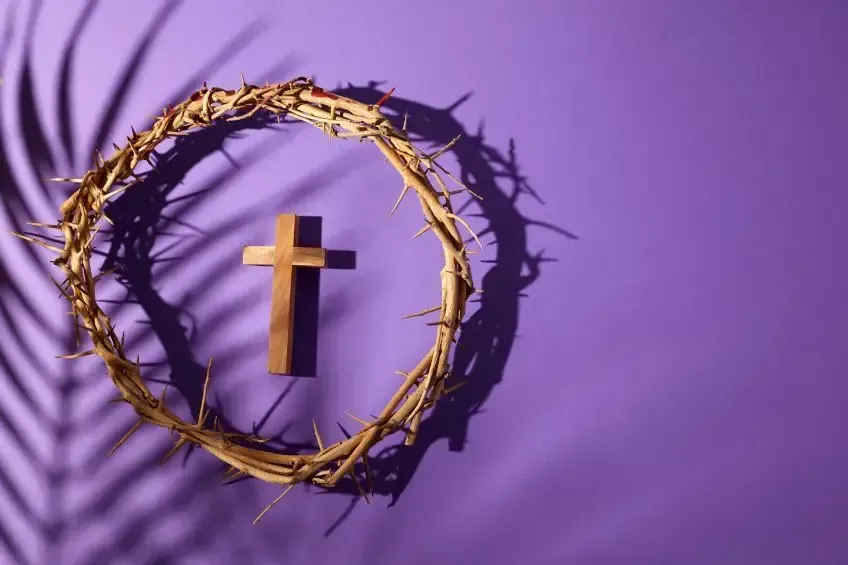
Lent is a sacred period for Christians. It lasts for 40 days, beginning on Ash Wednesday and ending on Easter Sunday. Exactly how this time is used depends on the practices of each individual, but typically it is a time for things such as reflection, prayer, penance, giving, and fasting. Lent is a time to prepare one’s heart and mind for Good Friday and Easter and to remind Christians of the sacrifice made by Jesus Christ. The word Lent comes from the Old English word “lencten” meaning springtime and from the German word “langitinaz” meaning lengthening. Lent is observed in the spring when days are starting to get longer. Lent recognizes the 40 days following Jesus’ baptism when he went into the desert without food or water and was tempted by Satan. By observing Lent, Christians remember Christ’s sacrifice. Easter celebrates the resurrection of Christ following his death on the cross and Lent helps Christians remember the events leading up to his crucifixion. Fasting is a very common practice during Lent. Fasting is seen as a reminder of Jesus’ sacrifice. It can also be used as a time to connect more with God. But not everyone fasts in the same way. While some Christians may fast for the entire period, today most use this as a time to give up a particular vice as a form of sacrifice. Typically these are things like a favorite food or drink. And others may fast only on Ash Wednesday or Good Friday (the Friday before Easter). Another common practice during this time is to give to others such as by donating goods to charity, giving money to those in need, or giving of one’s time to a special cause. Christians do not believe that this time of repentance and sacrifice is done to earn favor with God, as Christians believe that Jesus’ sacrifice on the cross is the only thing that has the power to save. Instead Lent is seen as a time to improve one’s relationship with God, accept his mercy, repent and grow as a believer. Spending time fasting and praying during Lent can make the Easter celebration more meaningful.

